Wednesday, December 3, 2014

A life measured in pizza

Note: below is the first chapter of an upcoming e-book for home pizza bakers. As Rubber Pancakes fans, you’ll be the first to know when the book is available for download.

I love pizza. By that, I mean I love pizza.

There were a few years when the kids were little that things were typically insane. Work, school, sports, band rehearsals, music lessons, karate classes … the typical daily chaos of the young American family. And we ate pizza on average two nights a week.

After a few months of this, one day Beth apologized for the fact that we so often depended on the skills of the local pizza baker to supply the evening’s small slice of allotted table time.

I remember looking at her like she had two heads. “Are you kidding?” I asked. “I could eat pizza five nights a week!” She had nothing to worry about. It was no overstatement. That’s how much I love pizza.

Of course, in the real world, eating pizza five nights a week is not such a practical plan. It would be a quick trip to lost money and gained pounds. (But, how cool would it be?)

Oh, well. We can dream of a universe where pizza is less costly. Maybe some day, in a life after this one. But in our particular corner of the cosmos, we play by the rules. And pizza is an occasional treat, timed near gym workouts to pay the piper. Sigh.

Although I haven’t done the research, I expect most Americans see pizza as a commonplace, ubiquitous thing. It is, to a degree, especially if you live far from the East Coast. But for me, it’s more than that. It’s near to a religious experience. For starters, I’m Italian and I live in New Jersey. That gives me a huge advantage over much of the rest of the population. New Jersey might be about the best place on the planet to be a pizza addict. By proximity alone, we’re under the influence of two of the world’s greatest pizza towns: New York and Philadelphia. And both have hundreds of examples of really fine pizza.

At the risk of sounding like a snob with a superiority complex, I pity the folks in California and South Dakota and Iowa and – who knows where? All those places where “pizza” refers to a slab of dense, mushy bread topped by sugar-sweet sauce and overloaded with fat, salt and pasteurized processed cheese. The stuff that’s churned out by faceless Fortune-500 chain conglomerates with shareholders to reward.

If I had my way, the FDA would force those outfits to call their product what it is: pizza substitute.

Now I’m not saying you can’t enjoy pizza in places where it’s not truly understood. In fact, millions do. All over the map. But that’s the dirty little secret of the pizza-industrial complex. If all those unschooled millions knew what pizza is really supposed to taste like, the conglomerates would head into chapter 11 faster than you can say mozzarella.

But that’s a topic for another day.

I can’t reconstruct the day I ate my first pizza. It was probably before I learned to walk. But this, I can guarantee. It was really good pizza. Because 1) mass-produced pizza substitute didn’t exist back then, when dinosaurs roamed the earth. And 2) Once it appeared, Italian-Americans living in New Jersey won’t eat it. Ever. Under any circumstances. Period.

No, my first pizza was either one my dad stretched himself, topped with homemade spaghetti sauce and baked up in our own kitchen. Or it was a thin, crisp, perfectly balanced masterpiece of flavor nirvana, hand-tossed and baked in that magical little Dante’s inferno that was our neighborhood pizzeria’s oven.

So is it any wonder I am so particular about it?

Even under the most routine and commonplace circumstances, in my life, pizza was always special. A celebration. A full-blown riot of texture and flavor that makes your taste buds sing and gives you one more reason to thank God you were born human on planet Earth.

Especially at Grandma’s house. Oh, man. I could write volumes on how good my grandmother’s pizza was. I’ll save that for future chapter. Suffice to say, it was heaven on earth.

As my young brain developed, it was permanently suffused with pizza perfection, coming from every angle. So it was no surprise I jumped at the opportunity to learn to make it myself, both for fun and profit. I was a professional pizza baker before I had a driver’s license. Although my career has since shifted from pizza man to wordsmith, I still look back with wonder at those early years of exploration and adventure – learning how it was really done in the backroom and blazing stone ovens of that neighborhood pizza joint that employed me.

It was nothing short of black magic. There, I learned to harness the power of yeast. I mastered the unique skill of rolling a dough ball, just tight enough to make the perfect pie after a day of rest in cold storage. I watched my teachers, haggling for better quality cheese and tomatoes. And under their watchful eye, I practiced the black art of doctoring: tricks of the trade we employed to finesse industrial tomato products from their prison of pedestrian mediocrity.

We weren’t making gourmet pizza. There was no such thing, in those days. We were a bunch of young, adventurous guys, none higher than middle management. We had little or no say over what got delivered – those decisions were made over our heads. But we cared. We did everything possible to force a pretty good pizza into existence from crates of nondescript ingredients, delivered to the back door via tractor-trailer. Whether we had the authority, I’m not sure, but we made decisions about how to handle the stuff, once it came off the truck. And it’s the reason our pizza was just a little bit better than that of the guy across the street (and a million times better than the chain joints). It was a life lesson that stuck. Do your best with what you have, even if that means breaking the rules.

So began a life-long odyssey in search of another trick, technique or revelation towards a better way to make really good pizza. And with 30 years of knowledge and experimentation under my belt – I can make this statement, with confidence: if I could invite you over some night, you would find the pizza I make at home among the best you’ve ever had.

Thus begins our journey. Stick with me. In future chapters, we’ll explore together what separates good from great in the world of pizza baked at home. You’re in an enviable position. Whether you’ve never made pizza at home before or you’ve been at it for a while – I will help you make it amazing. The ingredients are not exotic. In all likelihood, everything you need is available at your local supermarket. That wasn’t always the case – but today, we live in a world of shopping diversity and that’s a boon to the home pizza maker.

Just like in the backroom of my childhood employer – it’s all in the decisions you make on how to handle your ingredients. And I’ll unlock the secrets for you, one step at a time, as we take the journey together.

To be continued ...


Wednesday, October 8, 2014

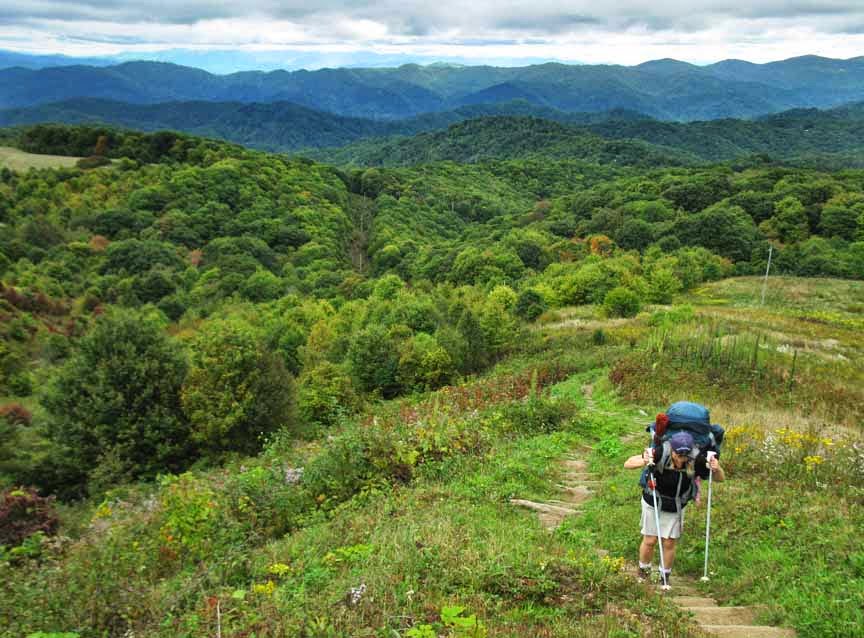
Why hike the "A.T.?"


First, let me set the stage. Stripped to its core, hiking the Appalachian Trail in the southern mountains consists of the following, more or less: First, rise at dawn and climb a steep, uphill mountain path, for, say, four hours. Next, clamber down the other side, two hours or so, and try not to make like a snowball. Repeat. The next day, start the cycle over. Rain or shine, wind or snow.

Oh, and did I mention? Do it with 45 pounds of food, water and survival gear strapped to your back.

Only the pathologically upbeat would describe what you do in between all this recreational activity as sleep. Before dark, you put on your plastic underwear*, slip into your plastic sleeping bag and zip yourself into your plastic tent. Utterly, physically, mentally exhausted – you shut your eyes and try, optimistically, to take a nap.

Because a nap is all you’re going to get. Fighting the mountain doesn’t end at sunset. All night, every 20 minutes, you wake up, disoriented and with heart pounding to either A) rearrange yourself after you and your plastic sleeping bag have slid into a small ball at the downhill end of the tent or B) yell at the bears to get them out of your campsite.

And you’re truly off the grid. There’s not much of a safety net, at least where we hiked – 40 miles on the North Carolina-Tennessee border. Cell phones don’t work. If you have a serious heart attack, you might die. Simple as that. You might survive, depending exactly where you are, if you get lucky with a cell phone and if there are people around to hike to help. But that’s not a thing you can really depend on. And you could easily be dead before the good Samaritans get to civilization.

If you fall and break a leg (easy to imagine where the trail meanders inches from heart-stopping cliffs and ravines) you may or may not get out alive. You could freeze to death, take a snakebite, die from dehydration or starve after bears steal your food. The Appalachian Trail is a tutti-frutti variety pack of opportunities for demise.

Sound like fun? Trust me, it’s not. But I’d do it again in a heartbeat.

So the obvious question becomes – why? All the standard responses. The hiking is in some of the most spectacularly beautiful scenery that exists on the East Coast. The Appalachian Trail (or AT, as aficionados prefer) is a true enigma. It runs over 2,100 miles through 14 states, Georgia to Maine. Largely intact, in the form its forward-thinking planners and builders devised back in the mid 1920s, it’s mostly wilderness. Yet it rarely strays more than a few hours’ drive from the country’s most densely populated megalopolis.

And it’s bona fide, Katy-bar-the-door wilderness. At least it feels that way. What struck me – besides the natural beauty of largely undisturbed tracts of woods, rocks and mountaintops – was the quiet. There are few places so close to so many people where you can experience what the earth sounded like before we started building highways, electric refrigerators, cell phone towers and godforsaken leaf blowers. (Don’t get me started on that infernal engine of Satan.)

When you’re out there, there are times when all you can hear are bees working the meadow flowers, trees creaking, an occasional bird squawk. And that’s it. No backdrop of motors, sirens, fans, phones and all the rest of the cacophony of chaos that we have grown accustomed to, every day. The world is a deafeningly noisy place once you’ve heard the quieter bits of the AT.

But solitude isn’t enough reason to risk your life and forego indoor plumbing and a warm bed. You can experience that kind of solitude on a half-day hike, humping nothing more than a bottle of water and a Snickers bar in your Sponge Bob rucksack.

There are the views, of course. When you finally do get to the top, the vistas are nothing short of astonishing. From the top of Max Patch, for example, the AT hiker is treated to an indescribable 360-degree view of the Blue Ridge, the Blacks, the Smokies and more – stretching as far as the eye can see.

But that’s not enough reason. As you’re making that 4,600-foot trek to the top of Max Patch, one of the things you see is the bloody parking lot. You can drive nearly to the top of Max Patch, for God’s sake.

The hiking is, at best, arduous and at worse, unimaginably terrifying. If you’re not in shape when you get there, you’re going to have a miserable time, especially if you’re only doing a few days – not enough to get into condition as you go. The trail is occasionally smooth and level, but more often gnarled with roots, rocks and poison ivy. Blisters become your constant companions. And an extra bonus comes in autumn, when we did our four days – acorns. By the thousand, each a ball bearing underfoot, ready to acquaint you up-close-and-personal with the Newton’s laws of acceleration in the style of Wile E. Coyote.

And that’s where I landed (no pun) when I finally came up with a decent answer for why? You do it, because it’s hard. It’s what psychologists describe as flow: true happiness that results from a challenge towards a goal, requiring intense concentration to the complete exclusion of all else.

For me, the concept describes the AT experience nearly perfectly. You’re in the zone, so to speak. You have to make your next destination, be it a shelter, gap, mountaintop or checkpoint. Nothing else seems to matter. Time is distorted. You focus exclusively on putting one foot in front of the other – and not just anywhere, but in the exact right spot that hopefully won’t send you hurtling down the ravine. The activity becomes its own reward.

And it’s you against the mountain. You either come out in one piece to hike another day, or you don’t. There’s something comforting about that kind if binary finality. It’s a black and white world we rarely get to glimpse in the daily negotiation of life – governed by so many shades of gray.

I think that’s what makes the AT special. And possibly a popular motivation for the thousands who try it each year – some going full-Monty in an attempt to hike all 2,100 miles in one go. (My hat is off to them.)

In a hyperkinetic, hyperconnected, 24/7 world, the AT is a place where you can simply be. And at least in our little corner of the world, precious few places can stake that claim.

*Everything you wear on the A.T. is synthetic. It's a safety issue. Cotton takes forever to dry, in the event you hike through a downpour. And wet means cold.

Saturday, May 18, 2013

Fallor ergo sum: I err, therefore I am


I was flattered to receive an invitation this weekend to a Christian men's retreat, known as Marked Men for Christ, in Spring City, Pa. It's a somewhat mysterious phenomenon – one participants describe with exclamations like, “I can't tell you anything about it. But you gotta be there!”

Well, I can't tell you anything about it, either. Because I never made it.

The buddy who invited me told me just a few things – the essentials. One, he stressed: don't be late. If you're late, you don't get in.

For whatever reason, the retreat started at 6 on a Friday evening. In a location you can't get to without driving through the megalopolis chaos of the Philadelphia suburbs. That's why I gave myself three hours for the  two-hour trip. It wasn't enough. My first screw-up. Then I got lost. Twice. OK, three times. But who's counting screw-ups?

If you ever want to feel completely and utterly powerless, get lost in the Philly 'burbs at 5 p.m. on a Friday. Crawling along in a strange landscape of roofless concrete tunnels, you eat car exhaust and stare at the clock, praying for a miracle that never comes.

I'll spare you most of the details. Apparently I was on some no-stops-allowed grand tour of eastern Pennsylvania, arranged by a demented tour guide. Exton. Pottstown. Malvern. Downingtown. Frazer. Blue Bell. Norristown. King of Prussia. West Chester. I did them all. (All except Spring City, that is.) A few, more than once. Dehydrated, exhausted and ready to have a breakdown, at one point I actually thought it would have been nice to be run over by a dump truck. I would have welcomed the opportunity to lay down.

I know what you're thinking. No GPS? Right. I was on the bike and the bike's not set up for it. I might be asking for that for my birthday this year. (That was a hint for Mrs. Emma.)

I shot another 20 minutes finding an exit to stop and call the guys, tell them where I was and ask if I should keep going. Any grace on the don't-be-late edict? They didn't answer their phones. I called the venue manager. He answered his phone. But he couldn't help. He wasn't at the venue. He was at his son's baseball game.

Praying for divine directional intervention, I re-re-reread my directions and got back in the saddle. After one final wrong turn, I was back in Philadelphia. At 6:45. On the Schuylkill. Smelling mufflers. Feeling dreadful, discouraged, disappointed, defeated and depressed. I threw in the towel and headed for home.

Since my prayer for finding the right route had gone unanswered, instead I asked for some lesson in all this.

After a few hours of dreamless sleep, it was answered, graphically. Over morning coffee, I discovered Kathryn Schulz, the Crazy Wrongness Lady, as she ruefully calls herself.

She taught me the phrase, fallor ergo sum. It's a quote from St. Augustine, paraphrased. It means, “I err, therefore I am.” He wrote it 1,200 years before René Descartes penned his more famous “think” version.

Kathryn teaches a valuable lesson. To be human is to be wrong. Embrace it. Own it. Celebrate it.

Watch her TED Talk. It saved me from a weekend of negative energy, ill-spent in self-loathing. Instead, I'm embracing my fallibility. I'm grateful for getting home safe. And I'm celebrating the unexpected gift of a free Saturday.

I think I might transplant tomatoes. Hopefully I won't screw that up.


Thursday, April 11, 2013

It's official. I'm an old coot.

When you get to be my age (206), it's inevitable to have an old-coot moment. It's when you realize that just about everybody you know is younger than you.

It usually starts with people in authority. One day you notice you're like 1,000 years older than your doctor, your pharmacist, your letter carrier and that 12-year-old policeman riding his bicycle through your neighborhood. You know, the guy with the helmet, the gun and the baseball cards in the spokes?


None of those lit the light bulb for me. Like most guys, I just continue pretending I'm still 18 and leave it at that. Fantasy is a wonderful aid to mental health.

No, for me, it wasn't the kids' teachers or the motor vehicle clerks, the cable guy or the President of the United States.

It was Dr. McCoy.

When I was a kid, watching Star Trek, DeForest Kelley was older than my dad. By nine full years. In my mind, he was always the old doctor, aging along with the Star Trek franchise. I hadn't given DeForest Kelly a thought in years. I'm not much of a Trekkie. Liked the original series (most of it), never got into any of the new series and thought most of the movies were disappointing. (Though I did like Chris Pine and Zachary Quinto's reprise of Kirk and Spock on the big screen.)

So when the original Star Trek popped up on my Netflix, I thought - hey, that would be fun. The garish sets, makeup and costumes. (Acid-trip colors were the way to go in 1966, when color TV was brand-spankin' new.) The bizarre props. (Remember the salt shakers?) The camera tricks. The creators' vision of 23rd-century electronics, all obsolete by about 1980. And Bill Shatner's inimitable 60s TV style. It's a kick.

Then Kelley showed up. And I my inner coot came of age. Holy crap! I'm older than Bones!

Kelley was 46 when the show originally aired. Even the old doctor is younger than I. And he was the eldest member of the original cast, IMDB tells me. Gee, thanks. Pretty soon he'll look like those one of those kinder-cops on a bike.

It's OK, not all is lost. I may be older than most of the world. But there's one demographic I can depend on to keep my young man fantasy alive. At least for a few more years.

There's always the Supreme Court.

Thursday, March 7, 2013

Play Golf to help Haiti

Hi, gang. A quick announcement - a buddy of mine is among the Hope for Haiti Team, from First United Methodist Church in Cape May Court House. They have been traveling to work in Haiti periodically since the 2010 earthquake.

They repair and build homes, volunteer as health care workers and do whatever else they can to help.

The new focus is finishing a new building for the Ecole Henri Christophe primary school in Bayonnais. There, 600 children grades K - 8 receive much more than education. The school also provides food, clothing, clean water and employment. It's a vital part of the community and its recovery.

And here's an easy way for you to help. To raise money for their 2013 trip, Team Haiti runs a Golf Tournament. Basic info below. I also scanned their registration form - the quality is so-so but it is printable and readable.

Thanks and please share with any golfers on your e-mail list.

-Sal

*******************************************************

From First UMC Church, Cape May Court House

the Second Annual
Hope for Haiti Golf Tournament

Friday April 19, 2013
Avalon Golf Club
Noon registration, dinner at 6 pm

$125 per player
Early-bird discount - $50 off foursome if you register before April 1

For details and sponsorship information,
call Cherie Champion: 609 602 5664,
or the church office: 609 465 7087.

*******************************************************


Saturday, November 10, 2012

The best sandwich I ever ate


By Sal Emma

I've had some really great sandwiches. On merits alone, the top of the heap would be fresh mozzarella, roasted red peppers and big, tender basil leaves with olive oil and balsamic vinegar on a slab of tender, crusty, deeply flavored Italian bread at Manganaro's in New York. Sadly, those sandwiches are no longer being made as Manganaro's closed their doors after some 90 years in business. But that's another story.

This is not a food review. It's about people coming together in times of peril to do what they can to help.

As most of you already know, after Hurricane Sandy I spent some time in Manasquan, N.J. helping cousins Mike and Christina Notaro clean out their flooded home to make way for the work crews to pull the floor and soaked drywall. It's heart-wrenching work, as much of what we dragged out to the curb were irreplaceable memories: scrapbooks, photos, yearbooks, special toys. But in spite of the emotional, difficult task before them, Mike and Christina are taking it in stride and showing admirable strength and grace. They are safe and staying with relatives until the work is done.

When I got the call, I pretty much made a beeline for Manasquan, with two stops in mind. Mike asked that I try to find some big plastic containers to hold the small stuff they were putting into storage. They were in short supply (everybody else at the New Jersey seashore had similar plans.) But I managed to score a few. And, figuring the work crew would be up for a snack, I stopped at our locally-famous Frog Hollow for a dozen of the world's greatest donuts.

My plan was to find a Wawa closer to Christina's house and grab a box of hot coffee to go with the donuts. Two problems: first, I never found a Wawa. Second, even if I had succeeded in locating one, it would have been closed for lack of power. So the crew didn't get their coffee. But the donuts were devoured with relish.

I was also planning to get my lunch at that Wawa stop, since I had jumped into the car as quickly as I could. So I never got my lunch. No big deal, in the grand scheme of things. I've done without many times before. And I could always grab a donut. In fact I wasn't even thinking about food until the sandwich brigade arrived.

I was surveying the damage, chatting with Mike and helping the other men haul soaked furniture out of the house. A small cadre of young moms and their pre-teen children arrived, on foot. "Anybody hungry?" they asked. They had baskets of handmade sandwiches, bottled water and probably some other goodies.

It was at that moment that I realized how hungry I was. “Wow! That is so nice. May I have one?” I asked. “Help yourself. Take two,” came the reply. They had spent a fair amount of time putting those sandwiches together and they were thrilled to have some customers. They even had a modest variety, ham, turkey, not sure what else. I imagine they were eager to empty out their powerless fridges before the stuff started going south. She gave me a sandwich and a bottle of water and moved to the next house.

This was a sandwich I’d never, ever make for myself. Turkey, American and mayo on puffy white bread. It was squishy and bland and uninteresting. And it was the best damned sandwich I’ve ever eaten.

At first, I thought – how could it be this good? It makes no sense. Well, I was starving, right? Not so fast. I thought the same thing. Then remembered that earlier this year, I broke a 24-hour fast with a big, drippy, stinky hoagy. I don’t particularly like big, drippy, stinky hoagies. And even though I was famished after the fast, I didn’t enjoy that hoagy much more than I would have on a normal day. It had to be more than just hunger.

I think it was because the sandwich was made with love. Made by people honestly concerned about both their neighbors – and people like me, the strangers in their midst. That’s what made it sublime.

That simple, pedestrian sandwich is a graphic reminder of the potential we have to do good when trouble strikes. These women knew they couldn’t undo the flood damage or magically restore the power lines. So they did what they could. They met around a dimly lit table in a broken house and assembled sandwiches for a broken neighborhood. It was a small gesture, an easy task, a no-brainer. Yet their accomplishment took on awesome power, bigger than any of us. They were sandwiches imbued with the power of God himself.

No wonder they tasted so good.

Monday, September 17, 2012

The terrible restaurant I can’t wait to go back to


Recently we had a strange and delightful restaurant experience. A friend gave us a gift certificate. We knew absolutely nothing about the place so had no real expectations outside the standard restaurant drill. Let’s say it was bizarre, from the get-go.

First of all, it’s in a crappy strip mall. I know, what strip mall isn’t crappy? But this one is really crappy. Dog ugly when it opened during the Reagan administration. Today, dog ugly with 350,000 miles on it.

We walked through the front door into what only the most hopeless optimist could call a lobby. It was about 4x4, with a cloth curtain separating the dining room. Essentially, a boardwalk photo booth. We stood there a good five minutes without anybody acknowledging us. Finally, Mrs. Emma stuck her head through the curtain and caught the waiter’s eye.

He seemed nice enough, but was hapless and overwhelmed in a way that made him fairly brusque. “Do you have a reservation?” was our greeting. No hello, welcome or sorry-to-make-you-wait. Once we told him we did indeed have a reservation (10 minutes ago, by this point) he disappeared, without a word.

So we waited, without instruction or encouragement.

Restaurants make my “never go back under any circumstances” list after three strikes. But it takes most Jersey shore restaurants the better part of an evening to swing and miss three times. Lousy atmosphere: strike one. Cruddy service: strike two. Mediocre food: strike three.

Tonight, I'd called strikes one and two inside the first 10 minutes. Before we even left the photo booth. Which by now was crammed with more equally confused hopefuls, pressing in to get out of the torrents of rain overflowing the potholes in the parking lot.

After at least five more minutes, he returned and pointed us in the general direction of a table.

I’ll try to set the scene. The place is about the size of an average family room. Into that space were crammed several dozen tables and a full restaurant kitchen. Whether the dining room was in the kitchen or the kitchen was in the dining room is academic. It’s all one space, so you gaze down the line as the chefs noisily flambé and sauté. The aisles were maybe 18 inches wide. So every time somebody walks behind you, he kicks your chair. Distance between tables: an inch and a half. I’m not exaggerating. Imagine cafeteria seating, with really nice décor.

Already annoyed by the photo booth, now I’m on a slow burn. By the grace of God, one of the women sitting next to us read my expression.

“Never been here, huh?” she asked. She could spot a virgin. When we confirmed her suspicion, she said, “Don’t worry. It’s worth the chaos.” I could only hope, though I was already fully expecting the inevitable cherry atop the standard crappy restaurant sundae: lousy food.

Since you’re basically sitting in the laps of the strangers next to you, it’s natural to strike up a conversation. On one side, a couple from Philadelphia with a vacation home in Longport. “We pretty much eat here every week in the summer,” they told us. On the other, a party of four including a CIA-trained* casino chef from Beesley’s Point. “I hardly ever eat out,” he said. (It’s hard to please a chef, especially at the Jersey shore, the food mediocrity capital of the world.) “But this place, I keep coming back to.” Their testimony was encouraging.

Waiter Boy returned briefly with the water pitcher, a saucer of virgin olive oil and a few thick slices of crusty bread. He rattled off the specials, then abandoned us once again. It’s a BYOB, but I had to resort to opening my own. Fortunately we both carry pocketknives for such a circumstance. With no way to summon him for seasoning, we borrowed some red pepper from the next table.

The menu was sparse and a bit pricey. $12 appetizers, $30 entrees. $6 for bottled water. But very interesting. Authentic Italian – not your typical Americanized version, red sauce slathered on everything from shrimp to spumoni.

Finally he returned. From the specials menu, the figs sounded too good to pass up so we ordered them. Main courses: chef’s daily potato gnocchi for Mrs. Emma and spaghetti with white clams for me.

Apparently, once your order is in, the place gets down to business. The figs arrived with surprising speed. Fresh-picked plumpers, stuffed with gorgonzola cheese, wrapped in speck ham (a smokier, sweeter, juniper-infused version of prosciutto) oven-roasted and finished with a balsamic reduction glaze. We dug in.

Oh. My. God.

In his Soul of a Chef: The Journey Toward Perfection, chef and author Michael Ruhlman documents both cooking and dining at Thomas Keller’s legendary French Laundry in California's Napa Valley. I read it aeons ago. (Great read, I recommend it.) One thing stuck with me. A word a French Laundry diner used to describe how Keller’s culinary artistry made her feel: giddy. I remember thinking: well, that’s one word I’ve never used to describe my response to restaurant food. But wouldn’t it be cool?

I’d be lying if I told you the figs made me feel any less. If we’d had another loaf of bread, we’d have eaten the whole thing, sopping up the glaze. I resisted the temptation to lick the plate. But the thought crossed my mind.

Then, the main courses came out.

Astonishing.

Mrs. Emma’s gnocchi were light, delicate, supremely flavored and perfectly balanced. A harmonious sauce of fresh red peppers, mushrooms, white wine and who knows what else. Amazing.

My pasta with clams? The absolute best I’ve ever had. Period. And that includes outstanding homemade versions created at the hands of gifted old Italians.

And here’s the best part. I have no idea why they were the best I’d ever had. I couldn’t put my finger on any one voice in this magnificent symphony of flavor. It was sublime. The apex of culinary craft. Call-the-cops, Katie-bar-the-door perfection.

Even though I was briefly disappointed by the pasta's state of doneness. A few ticks short of al dente, it was nearly crunchy. But that was only the first bite. The chefs had preheated the bowl and compensated with perfectly undercooked pasta. By the time I'd released the clams from their shells, the pasta had finished, precisely where it should have. That takes skill.

Those of you who know me know I hold restaurants to a crazy high standard. Like the chef with whom we shared a table – they almost always let me down. Let’s face it. When you pay money to eat out, shouldn’t the food to be better than what you can make on your own? I guess it’s the price you pay for being a pretty good cook. Most restaurants fail. Predictably.

Not this one. The atmosphere was goofy and the service was spotty. Who cares?

The lady was right. Worth the chaos. And then some.


Luke Palladino Seasonal Italian Cooking
Plaza 9 Shopping Center
1333 New Road
Northfield, NJ 08225
609 646-8189
lukepalladino.com
 BYOB
Reservations recommended but walk-ins welcome to try their luck. 


*The other CIA: the Culinary Institute of America, one of the world's most prestigious chef schools.

Friday, August 17, 2012

The Day I Met the Angel


Newark, N.J. 1985. First time working for my buddy and mentor, Bob “Bear” Sanford. A retired TV repairman, Bear was a full-time communications tech and teacher at my college. For several years, satellite television had fueled his passion for tinkering. He was an early adopter, in the days when you had to build your own gear with a soldering iron and chicken wire.

Being the enterprising type, he’d figured out how to convert his expertise into income. He’d established a healthy weekend pay-per-view business. Back in those days, you couldn’t get pay-per-view at home. If you wanted to see a big boxing match, car race or other exclusive athletic event, you plunked your money down at some local haunt and watched it there.

Bear was the guy who set up the gear at bars, restaurants and other venues. And when he had the chance to wire more than one place for the same event, he hired young Turks like me to run the auxiliary locations.

I got the Newark assignment for a fight dubbed “The War,” pitting Newark's hometown hero “Marvelous” Marvin Hagler against Thomas Hearns.

I rehearsed the set-up in Bear’s Pennsylvania backyard. We ran a bunch of wires to a bevy of black boxes and a small satellite dish. He taught me how to aim the thing to find the tiny, tiny target: an invisible satellite the size of a VW Bug, floating 22 thousand miles above our heads.

With Bear conducting, I locked onto the satellite within minutes. Piece of cake. Two days later, I grabbed my two copilots and headed to Newark, early. I wanted plenty of time in case we had trouble.

Good thing.

I think we arrived at 2 pm for a 10 pm fight. Or something like that. Checked in with the owner – nice guy, natty in a shiny suit. It was a real classy place, linen tablecloths, crystal. Not exactly what we lily-white suburbanites expected in inner-city Newark.

We unloaded the van, ran the cables, hauled in the big projector TVs and assembled the antenna. I’d picked a spot behind the restaurant without any buildings or trees obstructing the satellite’s part of the sky. It was a dry, clear day. A blessing, because heavy rain can cause problems with reception.

As the others were setting up inside, I attempted to “shoot the bird.” I fired up a receiver and aimed the antenna, exactly as we’d done in Bear’s backyard.

Nothing.

I re-aimed.

Nothing.

I aimed again.

Nothing.

This was a puzzle. Didn’t make any sense. I knew where the satellite was. Nothing had changed since Bear’s backyard. Same antenna, same stand.

I aimed again. Nothing.

After 30 minutes of scanning practically every inch of sky, I still had zilch. By then, the other guys were finished inside so they came out to try their luck. Nothing. All we could do was scratch our heads.

No cell phones in those days. Bear was setting up a restaurant down in Trenton at the same moment. No way to get in touch with him. We were on our own.

That’s when the wino showed up.

If you called Central Casting and ordered a wino, this is the guy they’d send. Lanky, with spotty skin, too thin for his worn, soiled clothes. He ambled along like a guy rocking on a ship at sea. He paused to observe our predicament.

“Ain’t gonna work there,” he bellowed. “Gotta put it over here!” And he pointed to a spot not three feet from where I’d planted the antenna.

“Thanks a lot,” I yelled back, through a big, fake smile. Thanks for your help, old timer, I was thinking. We know a little bit more about this then you do, we’ll be fine, thanks.

He shrugged and wandered off, never to be seen again.

We aimed and re-aimed that antenna for at least another hour. Maybe more. It felt like four. By then, the restaurateur’s inner circle of friends and VIPs had arrived for dinner and cocktails before the fight. I think the mayor might have even been among them. The place was starting to fill up. And I was starting to get that feeling of dread in the back of my throat. A very large crowd of fight fans was planning their evening around me getting that damned satellite signal. And I was no closer after the better part of two hours, trying everything we could think of.

Flashes of panic crossed my comrades’ faces. These guys were basically hired hands. I was the one who was supposed to know what he was doing.

So I made an executive decision.

“Let’s put it where the wino wants it.” I exclaimed.

Eager for an opportunity to try something, we sprung into action. Assembled, the antenna was a heavy affair. It took the three of us to wrestle it into place. I’m not exaggerating when I tell you we moved the thing less than a yard. I leveled it, swung it towards the satellite and watched the receiver with hope and prayer.

Bingo! I had a green light inside a minute. Joy and relief spread through the team like lightning.

We were ready – before the crowd had swelled and much beer had flowed. I hate to dwell on what could have happened, had we never shot that bird. Although the fight went only three rounds, the fans got their money’s worth. Hagler was cut early and bled through the whole fight. Hearns broke his hand in round one, but stayed alive long enough to have Hagler put his lights out. Everybody went home happy.

The wino saved our bacon.

I didn’t recognize him as an angel that day. But today, I have no doubt.

Thursday, June 21, 2012

Beer Soaked Video


A big shout-out to Jeff Linkous of the Beer Stained Letter. Jeff diligently documented our homebrew adventures with the Tun Tavern's brewmaster Tim Kelly and posted a crisp little video.

Friday, June 1, 2012

Hot, Wet & Dirty


By Sal Emma

I always knew homebrewing is hot, wet, strenuous and potentially dangerous work. Today, I know making beer for pay is hot, wet, strenuous – and even more dangerous.

It brings new appreciation for that hoppy IPA or tart saison they’re cooking up at your local brewpub or micro. It’s (almost) like eating king crab after watching “Deadliest Catch” on Discovery. Sure, few brewers pay the ultimate sacrifice for their craft. But you could easily mess yourself up pretty nicely in a brewery.

Whether it’s wear and tear after hand loading a ton of grain or having 220-degree steam melt your face off … the men and women who brew your favorite beer are putting their all into it. Next time you hoist a glass, toast the folks who forced it into existence.

We had an up-close and personal look at all this recently, apprenticed to a patient and gracious tutor, Tim Kelly. Tim’s the brewmaster over at Tun Tavern Brewpub in Atlantic City. And he was saddled with overseeing our attempt to scale up our 1.5 barrel homebrew recipe to 5.5 barrels at the Tun.

Terry Leary and Sal Emma at Tun Tavern, Atlantic City
We won the Tun’s annual homebrew contest. We entered three beers: Bruges Blonde, a Belgian-style golden; Old Coot, a British old ale and Black Hole Porter, a big, hoppy, robust porter. The Black Hole took first, which earned us the privilege of brewing it at Tun. (The Bruges took third, which didn’t win us anything – but it’s kinda cool.)

Picture the scene. After five years on the job, Tim knows every tic and burp of this aging Newlands brewery. He gets it – and routinely churns out delicious varieties in spite of a few bad motors, bum thermocouples and other bits of busted gear. At 15, the brewery is starting to show its age. Tim works it like a musician – and makes it sing.

Into that well-oiled orchestration toss three ogle-eyed homebrewers, all gung-ho to get their boots wet in a real brewery: yours truly; Terry Leary, a retired letter carrier from Marmora; and Terry’s nephew,  Brian Hutchings, an I.T. man from Somers Point.

For days before our scheduled brew, I was fretting over how our romp through Tim's brewery might affect him. Imagine trying to get a day’s work done with a bunch of photo-snapping tourists at your elbow. What a pain in the neck! I had little to worry about. Tim was an amazing host and teacher. I think this can be credited directly to the fact that he started out as a homebrewer. He knows the neurosis from which we suffer, first hand.

It was clear from the minute we walked in that we were the day’s brewers. Tim supervised – to keep us from ruining the beer and destroying ourselves. After that realization, Terry asked, “So, if the beer sucks, it’s our fault?” Tim’s response. “Absolutely.” One of many great laughs throughout the day.

Brewmaster Tim Kelly and apprentice Brian Hutchings
Tim had all the numbers crunched before we arrived, adapting our recipe to his brewhouse. And he let us do just about everything, within the safety margin. We monkeyed with the pump manifold, dipped into a furiously boiling brewpot for a test sample, hoisted 50-lb. sacks of malt, raked out the spent grains, weighed out the hops … the whole nine.

There’s a bit of voodoo in the process. Scaling up a recipe for a different brewhouse is not straightforward. A lot of judgment calls and creative decisions – substituting hops, settling on the various temperatures, for example. But, by day’s end, we had produced a beautifully hopped, rich and roasty brew that was delicious, even unfermented. We could taste potential there.

Now we wait, as it bubbles in Tim’s fermentation room. After dry-hopping and conditioning, it will occupy a tap at Tun in June. And we’ll serve it on the Battleship New Jersey at the Garden State Craft Brewers Guild’s Annual Beer Festival, June 23.

Update: Tim will tap our beer at the Tun the same day as the beer festival, Saturday, June 23. Get yours while it lasts.

Tuesday, March 27, 2012

Lincoln's Jokes

At a recent presentation at the Philadelphia Union League, author and scholar Dr. Gene Griessman provided a rare window into Abraham Lincoln, the man.

Portraying the 16th President, complete in period-correct wardrobe, Griessman told a lot of funny stories. He explained how Lincoln used humor to deflect his somewhat severe appearance. And it became one of his sharpest tactics to disarm adversaries and put his audiences at ease.

Griessman opened his talk with a promise. “I’ll tell you a story or two. And if you laugh, I’ll probably tell two or three more.”

A few examples:

On the subject of age:
You know, I’m over 200 years old. The best thing about that? No peer pressure.
On the subject of appearance:
I sat for a portrait in Mr. Brady’s photographic studio. The assistant charged with making the photograph said, “Just look natural, Mr. Lincoln.” To which I replied, “That is precisely what I am trying to avoid.”
A woman walked up to me and said, “Lincoln, you’re about the ugliest man I’ve ever seen.” I said, “I can’t help it.” She said, “You could stay home.”
On my birthday, folks said the prettiest baby in three counties had just been born. Unfortunately, my father traded that pretty baby for me. And three cows.
On accomplishment:
A small boy approached me the other day. He said, “Mr. Lincoln, you’ve inspired me to become President of the United States.” Well I was flattered and delighted. So I asked, “What exactly did I do to inspire you?” He said, “Nothing … it was something my daddy said. He said if Lincoln could be president, then anybody could.”
On conflict and language:
That reminds me of a little church in the mountains of southern Georgia. A huge rift had formed over the existence of hell. It had split the congregation into two camps, one firmly believing that hell exists and the other, unconvinced. No compromise, no settlement. It got so bad that the skeptics left that church and built their own, just down the road. The minute the last brick on the new church was laid, they erected a sign out front, which read: “There ain’t no hell.” So the other church erected their own sign in reply: “The hell there ain’t.”
On music:
Apparently General Grant is a bit tone-deaf. He told me, “Sir, I can recognize two songs. One of them is Yankee Doodle. The other is not.”
On brevity:
A man had lost his way and asked a local farmer for help. “Does it matter which road I take?” he asked. The farmer replied, “Not to me.” The man said, “Have you lived here all your life?” And the farmer said, “Not yet.” So the man said, “You don’t know much, do you?” To which the farmer replied, “Well, I ain’t the one who’s lost.” So the man asked, “Why did you take an instant dislike to me?” And the farmer said, “Saves time.”
On psychiatry:
A man walked into the psychiatrist’s office and shouted, “Bugs! I’ve got bugs crawling all over me!” And the psychiatrist said, “Well, get out of here, I don’t want them getting on me!”
On death:
I was walking through the churchyard the other day and saw an interesting gravestone inscription. It read:
Behold and see as you pass by;
For as you are, so once was I;
As I am now, so will you be;
Prepare unto death and follow me.
What struck me was the hand-written reply, scratched underneath:
To follow you I'm not content;
Until I know which way you went!

Breakfast with President Lincoln


By Sal Emma

Had breakfast with President Lincoln the other day.

Well, not exactly. It wasn’t a séance. It was Dr. Gene Griessman, author, teacher, actor and raconteur.

A writer who also does public speaking, Griessman does it with a twist. He has built a career becoming Abraham Lincoln. He trims his beard to match his long coat and stovepipe hat.

Greissman addressed a group of business leaders at the Union League in Philadelphia. A member and good friend invited me. And, I have to admit, Greissman surprised me. His schtik wasn’t at all what I expected. Well, not totally, anyway.

If you’ve never been to an event at the Union League, it’s largely paunchy, middle-aged, wealthy Republican WASP guys. I don’t exactly fit in. I’ve got the paunchy, middle-aged bit covered. It’s the wealthy Republican WASP part that makes me a fish out of water. I’m Italian. I have no money. I’m a left-leaning independent. And I don’t own a single $1,000 suit. Imagine Louie de Palma at Jenna Bush’s wedding.

That’s not to say there aren’t folks at the Union League representing other ethnic, religious and political groups. (Women, even!) They’re there. But I think they’re outnumbered.

Considering this gaggle of powerful attorneys, financial advisors, bankers and other opinion-makers, I expected something cheesy, uber-patriotic and over-the-top romantic. Draped in red, white and blue bunting.

Plus, it’s the Union League, for crying out loud. Some within their ranks describe President Lincoln as their “patron saint.” Not a surprise, considering the Union League was founded to support the president during the Civil War.

My worst fears seemed reality when Griessman was introduced as “the 16th President of the United States,” complete with a canned rendition of “Hail to the Chief.” Oh, brother.

But once the music and undeserved standing ovation faded, Griessman surprised me. He talked about Lincoln’s lifelong challenges – as a boy supporting his family, trying to make a living in rough country. His lack of formal schooling. His bouts with depression and melancholia. His feelings of inadequacy. Griessman brought dimension, familiarity and human frailty to a history book character we tend to lionize.

With photographic evidence, we know Lincoln was not the most handsome of presidents. Apparently Lincoln was all too aware of his severe appearance. It was often the root of jokes he is reported to have retold. He used humor to disarm and embrace the people he came in contact with.

Apparently, his reputation as a jokester occasionally got him into trouble. According to Griessman, Lincoln opened a cabinet meeting with a joke shortly after the battle of Antietam. To this day, Antietam remains the bloodiest day in American history – a slaughter of 23,000 Americans. That’s nearly half the total killed over 10 years of America’s involvement in Vietnam, in just one day.

When one of his cabinet members asked how he could possibly laugh at such a time, Lincoln responded: “I laugh to keep from crying.”

As a writer, what intrigued me most was Lincoln’s devotion to the written word and his scholarly treatment of iconic writing, like the Bible and the works of Shakespeare.

A bit of trivia: Lincoln read out loud. Seems an odd habit, but it makes sense when you consider his upbringing. There were no public schools in the woods of Kentucky and Indiana where Lincoln spent his formative years. Instead, parents pooled their money to pay a teacher to train their young charges in the three Rs. These humble little log cabin one-room schools earned the nicknamed "blab school." It was common for all the children to recite their lessons, out loud, in unison. It’s said you could hear a blab school a mile away.

In President Lincoln’s case, the payoff was profound. He wrote for the ear, because to him, words were always recited out loud. He learned cadence and rhythm from history’s greatest authors. It made him a better attorney. And it certainly cemented his place as one of the finest writers among those who have held the office of president.

Griessman demonstrated Lincoln's mastery of the spoken word with his most famous speech: the Gettysburg Address. The program turned to cheese again here – but thankfully it was brief. Griessman’s delivery was excellent and should have been unaccompanied, as the original audience heard it. But the presenters succumbed to temptation and put patriotic music behind it, which diluted its impact significantly.

Weighing in at just around 280 words, the speech ran under two minutes. It’s a polished, carefully constructed work of oratory that truly showcases Lincoln's incredible skills. Made more incredible when you realize that he pursued most of his advanced learning on his own, with no college or university.

Following his Lincoln portrayal, Griessman returned as himself, as it were, and spent some time discussing how businesspeople might apply Lincoln's leadership techniques. The entire program was informative and completely enjoyable. Griessman performs the Lincoln show at various gatherings throughout the country. If you have the opportunity to see it, I heartily recommend it.

Wednesday, February 22, 2012

Burned by Scantily Clad Women


By Sal Emma

Every word of what you’re about to read is true. Honest!

Beth, of course, says differently. And she takes great pleasure in telling her side of the story. Here’s what really happened.

On the long drive home from North Carolina after a recent family mini-reunion, we were targeting a spot to walk the pooch and grab a bite. The weather was OK. Sunny and dry, so we opted for the outdoor mall at White Marsh, Md.

As the family’s resident beer snob, I volunteered to pick the venue while Beth and Max took Westmonster for a walk. Lots of choices, but as always, beer selection was the prime motivator. I stuck my head into two or three places. Narrowed it down to the brewpub and, across the way, Tilted Kilt, a chain pseudo-Irish pub.

Let the record show, your Honor, that I’d never before heard of this particular establishment nor had I ever set foot in one before this occasion.

On any day, I’d go with the brewpub. I avoid chain joints like the plague and will almost always opt to enrich the true local economy by patronizing locally owned haunts. But I couldn’t this day. The problem, the place was heavy with the dense and somewhat overwhelming aromas of brewing. Stink, most would say. As a brewer myself, I have only respect for any brewpub trying to make a go of it (especially in such a horrid location as this, a Disneyesque fake main street in a fake mall parking lot.)

But the place was really ripe that day. I could have tolerated it OK but I knew Max would be unhappy, with his more easily offended olfactory sensibility.

So I decided the simulated Irish pub would be the better choice. No malodors to contend with and the beer selection was off the charts. Perfect.

I went back in to inquire about the dog. He’s a service dog in training, so most places understand that they have to let him in under ADA rules. But on very rare occasions, we’ll run up against an uninformed restaurateur who holds his ground, for one reason or another. So out of courtesy, we tend to ask ahead of time instead of barging in and demanding that the place accommodate him. I approached the hostess station.

It’s important to note, your Honor, this object’s construction.

It was a tall wooden box, maybe four and a half feet high. A young woman was standing inside. I could see her neck and head, and little else. I’m not much of a fashionista so I don’t normally notice what people are wearing. But in this case, the cabinetwork obscured her duds so they were completely out of mind. I asked if the service animal would be OK and she was very polite and friendly in her approval. I took a closer look at the beer taps, where I saw the second of only two employees I encoutered during this reconnaissance: a guy in a T-shirt.

Key details, your Honor. Woman in a wooden box. Guy in a T-shirt.

Back outside, I circled around to the bookstore to pick up the rest of the family, satisfied with my scouting mission. We headed back across the pseudo-street and marched through the front door.
At this point, we were immediately approached by a trio of Tilted Kilt representatives, female, bubbly and enthusiastically welcoming.

One thought went through my mind: I am so screwed.

Let’s just say the Tilted Kilt work uniform allows unrestricted views of almost all piercings and tattoos. If you’re not against scantily-clad women, take a look. 

Oh well. Already in deep, no turning back. We sat, settled the dog and I held the giant plank of a laminated Technicolor menu before my nose to avoid eye contact with my wife. It was in vain.

“So. We came here for the beer selection, huh?” came my spouse's incredulous response.

For the foreseeable future, “beer selection” has officially become our family’s euphemism for the architectural features of a pretty, perky and barely contained young woman.

“Wow. Would you look at the beer selection on her?”

And of course Beth won’t think of letting me live it down.

Thursday, February 9, 2012

Rubber Pancakes ... crowdsourced!


Yeah, man. We're at the cutting edge now. Crowdsourcing like the best and brightest, web-savvy 20-somethings.

Well. As long as you consider one guy a "crowd."

It was my buddy Denny. Part of my hope in posting the "Anyway" piece was that somebody in our vast global audience would know more about it - since it came to me without writing credit.

Denny nailed it:

It's called "The Paradoxical Commandments for Christians." The author is Kent M. Keith. He wrote it in 1968 when he was 19 and a sophomore at Harvard. It was part of a pamphlet he wrote for high school student leaders. It is now the basis for his book titled "Jesus Did It Anyway."
Keith penned the commandments in the 1960s and they quickly became fodder for the pre-Web Xerox sneakernet. Even Mother Teresa was rumored to have kept a copy.


Mystery solved! Thanks, Denny!

Tuesday, February 7, 2012

Anyway ...

By Sal Emma

[Postscript: a savvy RP reader recognized the poem, identified the author and taught us more about its origin.]

If there was one day I first began to absorb the amazing power of the World Wide Web, it was probably this one. It came into sharp focus, 20 years after the seed was planted.

My friend and former co-worker Mark reminded me of this little tale in an e-mail exchange yesterday. We were talking about how you try to do the right thing for your friends and neighbors and sometimes you get no thanks for it. Occasionally, your reward for doing somebody a favor is a swift kick in the pants. And we agreed that you have to do the right thing, anyway.

Which reminded me of a 20-year quest for a sentimental little poem.

Those of you old enough to remember a world without e-mail and Facebook might remember the analog version. The network administrators were office workers. The platform: Xerox. And by that I mean the ubiquitous photocopy machine. It was a sneakernet. You made the copy and carried it, on foot, to another who might make a copy of her own. On the network, jokes, cute stories, obscene drawings, bawdy limericks - you name it. All the same crap today's office workers zip around the world at the touch a button. But in those days, it took a little more effort and the network was a bit slower.

They were copies of copies of copies - the IBM Selectric typewriter font swelling to barely-readable Rohrschadt blobs of ink and toner. Most folks pinned these to their cubicle walls for casual observers.

Others - let's call them the bloggers of the pre-Web world - carried them around. Sometimes, full color on coated paper. These guys were serious. When you met one of these characters in the street, he'd say something like "Have I showed you my pride and joy?" Then extract a crinkled snapshot from his wallet for your examination. Really.

I met one of the former variety at a car stereo shop just north of Trenton, N.J. Beth had recently inherited her father's Oldsmobile, a lot like this one. It was about the size of a Korean grocery store and had a really cheesy GM/Delco radio with tinny transistor radio speakers. I decided to ask her to borrow it so I could secretly have a decent sound system installed as a birthday gift. AM/FM/cassette, of course.

I was buddies with one of the guys who worked at the shop which was the only reason they let me hang around during the install. Normally, a place like that will chase the owner away so they can curse at him and make fun of his car when he's not around. The guys at this shop were nothing like that. They went out of their way to be nice to me and were happy to share little trade secrets as they went about their work. At first I thought it was just my connection making the difference - but as the job progressed, it became apparent that one guy in particular really was that nice. He wasn't showing me any special treatment. It was just the way he interacted with everybody.

I was really taken by this guy. His no-questions-asked attitude of treating me like his greatest friend really impressed me. To this day I regret that I never figured out a way to befriend him. But in the 1980s, guys didn't exactly ask other guys for their phone numbers, if you know what I mean. It could send the wrong message.

At some point I had to go into his office for some paperwork. And I noticed one of these 27th generation Xeroxes pinned to his wall among the invoices, receipts and other work trash. It stood out - it might have even been in a frame. I went in for a closer look. It explained everything.

"Wow." I must have said, or something equally pithy and profound. Seeing my reaction, he told me it had become his life philosophy. And it blew me away. I was barely out of my teens and already working hard on cultivating a guarded, skeptical, cynical and somewhat angry-at-the-world mentality. And here was this guy, only a few years older than me, living a completely different kind of outlook.

It would be an overstatement to say that poem changed me. But it sure did stick with me. That entire day would have been forgotten I think, had it not been for the poem moment. My memory is notoriously bad for details of routine happenings three decades ago.

It impressed me. But not enough to prompt me to ask for a copy. Something I wished I had done for decades to come. It wasn't a big deal, nothing earth-shattering. But every three or four years, I'd think of that day, that car, that installer and that poem and think – crap, I wish I'd taken a copy of that thing.

Well, every three or four years quickly turns into 20. That's about how long it took for the poem to find its way back to me, thanks to the World Wide Web.

Somewhere around '99 or 2000, I was telling Mark about it, one day at work. And I thought ... hey, I wonder if anybody has posted it yet. I was skeptical. I could only remember one line of the poem, something about getting kicked in the teeth. But I also remembered a repeating word ... anyway. It was like - if you do this, you'll get that. Do this anyway. And so on. That was all I had.

It was enough. I think I searched "kick teeth anyway." And there it was - the very poem I'd remembered - and forgotten. Another one of those 'a-ha' moments that stick with you. That was the day I fully realized that we were seeing the world change in a gargantuan way, right before our eyes. I probably said "whoa," or something equally pithy and profound.

And here, for your edification, is the poem as I found it that day. It moves around with me and gets installed on each new computer as I upgrade. It's not tacked to my office wall but, like the time I was without it, I think of it every couple of years. When I do, I find it on my hard drive and reread it:

Anyway

People are unreasonable, illogical, and self-centered.
Love them anyway.
If you do good, people will accuse you of selfish ulterior motives.
Do good anyway.
If you are successful, you will win false friends and true enemies.
Succeed anyway.
The good you do today will be forgotten tomorrow.
Do good anyway.
Honesty and frankness make you vulnerable.
Be honest and frank anyway.
The biggest person with the biggest ideas can be shot down by the smallest people with the smallest minds.
Think big anyway.
People favor underdogs, but follow only top dogs.
Fight for underdogs anyway.
What you spend years building up may be destroyed overnight.
Build anyway.
People really need help, but will attack you if you help them.
Help them anyway.
Give the world the best you've got and it may kick you in the teeth.
Give the world the best you've got anyway.


Friday, January 27, 2012

Cupcakes: the Tale of Two Moms

By Sal Emma

This isn’t the post I imagined. In my mind’s eye, the cupcakes would be a huge success and I’d silently relish the thought that I’d brightened somebody’s day in a meaningful way.

It didn’t quite turn out like that.

But the lesson’s the same. It’s about doing the right thing for the right reason. So I'm posting it anyway.

A few nights ago, we crawled into bed with our usual routine, capping another hectic day. I flipped on my nerd radio (shortwave). She read. When she turns out the light – the signal is clear. She’s read enough to quiet her brain. She’s going to sleep now. Game over. See you tomorrow.

That’s why her question surprised the hell out of me. There’s never any talking after lights-out.

“When am I going to make the cupcakes?”

“What?”

“I have to make cupcakes for one of the girls at work. But I don’t know when I’m going to be able to do it.”

Her tomorrow was going to be just as insane as today. Another trip to Philly. A work reunion after that. Teaching karate after that. Barely 10 spare minutes.

This is Beth’s life. She’s not only living the supermom model, she’s defining it for the next generation.

My initial response was logical: “Why do you have to bake cupcakes for one of the girls at work?”

“Because her son’s birthday is Saturday.”

“Why are you baking cupcakes for her son’s birthday?”

“Because I offered to.”

“Why?”

“Because he wanted them and she couldn’t figure out how to make them so she would probably end up getting those crappy ones from the supermarket.”

I shuddered. Those greasy, malodorous sugar-bombs make me cringe. Understanding why anybody would put one anywhere near their mouth is beyond my intellectual capacity.

She had a fair argument. I remained skeptical. But, one thing I’ve learned after 25 years of marriage is that there are times when you have to be very careful to avoid saying the first thing that pops into your head.

This was one such occasion. And this train of thought went through my brain, in silence:

“Are you nuts? You work 50 hours a week. You take care of the house and the kids. You volunteer everyplace. You teach karate. You are fostering a service dog. You’re a Girl Scout leader. Why would you volunteer to bake cupcakes for somebody else’s kid?”

Then, this grenade: “Just because she’s too lazy to bake them herself?”

That was unfair. Below the belt. (Thank God I didn’t say it out loud.)

And then, the amazing thing. After this barrage of stream-of-consciousness cynicism, here’s what I actually said aloud:

“I’ll bake them.”

“Why?” she asked.

“Because the kid wants them and I have time.” (Business is slow this time of year, traditionally.)

This was a magical moment. I didn’t volunteer out of a sense of duty, guilt or sympathy. It wasn’t a huffy bit of sarcasm “oh, I guess now it’s my problem …” Anything but.

God simply laid the image of Beth’s friend on my heart. I like her. She’s hard working and funny. She takes good care of her child. She’s from a good family. And she’s a single mom, anything but lazy. It was like the Holy Spirit breathed on the back of my neck and I understood, clear as crystal. Making her cupcakes was exactly the thing that needed to be done, and I was in a position to do it.

It was a blessing I can barely describe with mere words. Because I can guarantee that a few years ago, old Sal – negative, cynical and pissed off at the world – would have not only said all those mean-spirited things, out loud – he would have been completely comfortable with saying them. That's why I am convinced it was a gift from God.

My friend Jim Wilson has been an incredible influence in my life. He’s smart, devoted, funny, hysterically sacrilegious and a true Christian in every sense of the word. I thank God (frequently) for the privilege of calling him a friend – thanks to us stumbling into the coolest little church in Ocean City, N.J. a few years back.

During many discussions of life, family, love, God and grace, Jimmy uses the word available a lot. It’s scripturally based, this idea that you simply lay your day at God’s feet and have him use you as he sees fit. Most of us fail in this, most of the time. (And when I say “us,” of course, I mean “me.”)

Living as a Christian is like anything else. Work, play, marriage, music, riding a bike. You get better at it with time. You stick with it, through fear, doubt, lean times and dark moments and you hope that God is real and that the Holy Spirit really does walk among us as we go about our daily business. You make a commitment to stay ‘available’ to God – and hope for the best. And you ask that he give you opportunities to be salt and light in the world.

Volunteering to bake those cupcakes was that opportunity, sure as shootin’. Inside a tenth of a second – the time it took my brain to conjure up all those negative things I could have pontificated aloud – God tapped on my shoulder. And I made my offer, freely, in love and without a scrap of resentment or hesitation. I couldn’t wait to bake them. (Maybe in the future, I'll go right to the offer and skip the bellyaching!)

So, I know what you’re thinking. How did the cupcakes turn out? I’m sure they’re great. But I didn’t make them. Beth found 27 spare minutes between karate and lights-out and made them herself. While I was out of the house in a meeting. She’s a sneaky supermom, on steroids.

And another true Christian, in every sense of the word.